
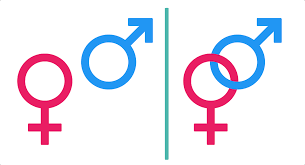
 Welcome once again to take a dive in languages - a big part in our journeys of life. Whether we actually make any journeys geographically or merely in our minds - digitally or otherwise. This time it will be about the third person singular - he and she. To the exclusion of all other aspects of gender specification.
So without entering in the discussion when and why the two genders get grammatically separated, or what is the role of feminism in all of this, let’s just say that I myself found out only a couple of weeks ago that gender neutrality is not that uncommon after all.
We learn to separate them - or not - in our mother tongue and from then on see the issue from our own language point of view. So in English-speaking countries he is always a male, and she a female. In German it is er and sie. And so on.
Then there are the languages that do not separate genders in third person singular. In my own language Finnish for example we don’t have grammatical genders but only talk about hän - which can mean either he or she. And consequently find it very hard to separate the genders in speech in other languages. It can also present a real challenge of figuring out what the author means if he or she only uses the third person singular when introducing a person in the first pages of the novel. You may end up having to read those first pages all over again!
In Swedish - a Germanic language like English - an interesting phenomenon has been taking place concerning this. They have of course their han and hon, but recently a gender neutral term has appeared: hen. It was actually proposed already in 1966, with reference to the Finnish hän. In July 2014 it was announced that hen would be included in the official glossary of the Swedish Academy, so Swedish newspapers for example use it as a matter of fact.
So what about other languages. There are around 6500 languages in the world, depending of course how you define a language. Of them quite a few are gender neutral, at least when spoken (written language is another story). To name a few: Armenian, Bengali, Estonian, Finnish, Hungarian, Kurdish, Mandarin, Persian, Swahili, Tagalog, Turkish.
So if you ever wonder when speaking with a non-English native why he or she finds it so hard to differentiate between genders, this may be why. We can be ever so proficient in foreign languages, but when it comes to that third person singular in spoken language, that is more often than not simply an automatic reflex from the mother tongue. And we find ourselves trying to correct that simple mistake, when it actually doesn’t even feel like a mistake but only a somewhat dumb and time-consuming characteristic of the other language. Which can naturally be used quite smartly for example in a novel.
A whole separate issue is the use of genders in defining whether a car or ship is a he or she and so on. One of the hardest features in learning German is having to memorize which is der, die and das. It would be neat of course if the third person singular - such a necessary part in our everyday communication - could be somehow simplified. But far more important than that is naturally the gender equality in our real living world. Sources: https://en.wikipedia.org/wiki/Hen_(pronoun) https://en.wikipedia.org/wiki/Gender_neutrality_in_languages_with_grammatical_gender https://en.wikipedia.org/wiki/Gender_neutrality_in_genderless_languages