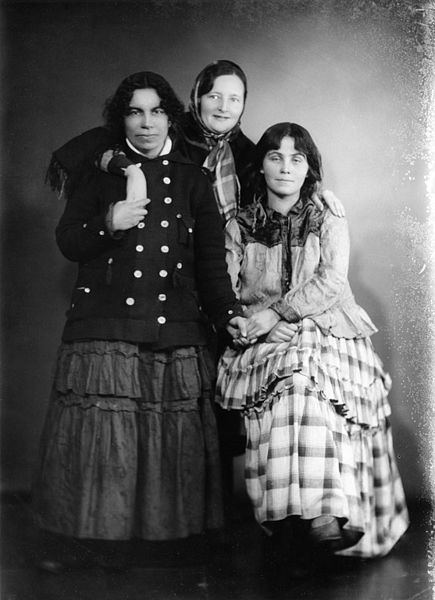
Three gypsy ladies in the 1930’s Helsinki
You readers of Language Day have come to see that this article series can contain most anything to do with languages. The lingual possibilities are countless and how could it be otherwise - there are thousands of languages and nations in the world.
This time in Language Day, we concentrate on the language spoken by the Romanis. And more precisely, Romanis living in Finland and Sweden. They tend to travel a lot between the two countries, and thus usually know both of the national languages. But also some of the “old” language, Romani. Derived from the language of their ancestral language Sanskrit.
Although the language has changed a lot - Romanis started to emigrate to different parts of Europe in the 16th century - it still has many common features.This article aims to shed some light on it for us who know absolutely nothing about it - which is most anybody!
Acording to Wikipedia, Romani is an Indo-Aryan macrolanguage of the Romani communities. Seven varieties of Romani are divergent enough to be considered languages of their own. The largest of these are Vlax Romani (about 500,000 speakers), Balkan Romani (600,000), and Sinte Romani (300,000). Some Romani communities speak mixed languages - like the Nordic Romanis - mixing Romani words with the majority language. These are known as Para-Romani varieties.
So, let’s have here some basic words and sentences in Nordic Romani! Or as the correct term goes, Finnish Kalo-language. Kaalengo tšimb in Kalo, spoken by Finnish Kale. The language is related to but not mutually intelligible with Scandoromani or Angloromani.The earliest records of Romanis in Finland is from the Finnish archipelago Ahvenanmaa in 1559.
There are today up to 10,000 speakers of Finnish Kalo. But many of the younger generation do not know the language. Still, about two-thirds of the Romanis in Finland do still speak the language, and there have been revival efforts, especially in recent years. Dictionaries and grammar books have been produced and some universities offer Finnish Kalo. Finnish Kalo - just like the Romani languages in Hungary - place the stress on the first syllable of the word, This is the case in the majority languages in both of these countries. Finnish Kalo has been taught in schools since the late 1980s, and if there is enough demand, municipalities are willing to establish Romani courses.
According to the Finnish language magazine Kielikello - Kalo comprises of
c. 23 % original Sanskrit words
c. 23 % Swedish loan words
10 % Finnish loan words,
and the rest is divided between other languages,
mainly German, Danish, Romanian, Greek and Hungarian.
As the Finnish Romani arrived in Finland from Sweden (at the time Finland was part of Sweden), their knowledge of the Swedish language suited them well to use as part of their “code language” in the new country. Thus they managed to preserve their own language in Finland, better than in the other Nordic countries. To some extent though, even today there still is this desire to keep the language hidden from their immediate non-Kalo surroundings, as it is so closely tied up with the culture that they quite easily seem to feel is being threatened by the majority culture.
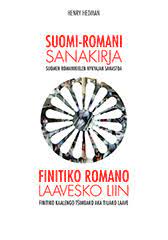
Anyway, here is finally some random words and sentences to you in Finnish Kalo. To get some idea of the language! Even for you linguists out there, this is probably a challenge, and for the rest of you, perhaps simply a small representation of another small language. To speakers of Hindi, Greek and some other languages, some of this might actually seem a bit familiar. The words and phrases you see below are all from the Finnish-Romani dictionary cordially provided by a Helsinki library: Suomi-Romani sanakirja/Finitiko Romano Laavesko Liin. But we make a small compromise here in order to simplify and clarify: we show only the simple forms of the consonants that actually would have an accent mark on them. And if you really want to delve into the language, you will surely find a way to do that!
Aahhibosko duitu = living room
Adressa = address
Alti = always
Apelsiinos hin oranssosko rangos = Orange is of the orange color
Apo drom staudas drouvo bibaht = There was a bad road accident
Apo tafla sas kaali ta baakli = There was coffee and pastries on the table
Aro biblioteka vojula te loonavel liine = You can loan books in the library
Balval = wind
Bankako automatos = ATM
Bankako pelehkos = bank card
Bare komujengo skooliba = adult education
Barjiba = harvest
Barjibosko haaben = vegetarian food
Baro fooros = the city of Helsinki
Baro komunis = adult
Biblioteka/Liinengiiro = library
Biljetos = ticket
Bollos = ball
Botnosko -Amerika = North America
Botnosko themme = the Nordic countries
Bukkako speeliba = puzzle, jigsaw
Bulôti = cloud
Byrjiba = origin
Dad, dada, tata = father
Dauva = this
Dej = mother
Del = God
Dikkaa = to see
Divisesko tseer = daycare
Douva hin tsihko maneera! = That’s a good way to do it!
Drab, draba = plant
Dui = two (2)
Dui varruno tseer = two-storey house
Dukadengo beero = ambulance
Duural sikjiba = distance learning
Eekor = squirrel
Enja = nine (9)
Finitiko lahtos = the Gulf of Finland
Finlando them = Finland
Foijako bollos = baseball
Foijako bollos hin huupako speelos = Baseball is a team game
Folkengo naaluno = member of the parlament
Foorosko fasuna = tram
Foorosko fasunaha vojula te vandruvel trystal fooros = The tram takes you all over the city
Goodi = brain
Grannos = neighbor
Haabenesko lista = menu
Hamnos = harbor
Heeruno ministeros = prime minister
Hielos = ice cream
Hockeysko speeliboskero = hockey player
Hyyribosko hisba = rental apartment
Iego komuja = next of kin
Iidako hyonos = The Baltic Sea
Internationaalo = international
Japanisko them = Japan
Jekkuros = individual
Jou behtas aro kurribosko skammi = He sat in a wheelchair
Jou hin dzarimen musikata = He is interested in music
Kaaliako stedos = coffee shop
Kaaliako stedosta vojuvena tsinnen kaali ta svettas = You can buy coffee and buns at the coffee shop
Kaaliakkiiro = coffee shop
Kaalos = ink
Kakjako them = Germany
Kaklija = scissors
Kartos = map
Khangarjako thaan = cemetery
Kher = house
Kokares = alone, by oneself
Komujengo horttibi = human rights
Koni fendide = best, the best
Konsilos = negotiation
Kouva = that, it
Kurrosko skammi = wheelchair
Laagako phagirba = crime
Laavengo guosiba = vocabulary
Lavesko liin = dictionary
Leen san langhto konsilos = They had a long negotiation
Lendibosko beero landidas aro felda = The airplane landed on the airfield
Levos = lion
Liine = book
Liinengiiro/biblioteka = library
Lokko = easy, light, cheap
Maaresko baasiboskero = toaster
Maḉô = fish
Mahhiinesko kurros = motorcycle
Mahkurno hyonos = The Mediterranian Sea
Markni = market
Massesko svettos = meatball
Me na vaa, ke dela brihno = I won’t be coming if it rains
Minoriteetos = minority
Minutos = minute
Moosa = moss
Moskvako fooros hin Porttibosko heeruno fooros = Moscow is the capital of Russia
Muskelos = muscle
Naartengo bandra = kinship
Netosko pah = internet site
Nevo, nyēvo = new
Nijal sas rankani bi stöt = The summer was beautiful, but short
Nikki = away
Norjako them = Norway
Oliivos = olive
Ona = both
Oppenbaariba = publication
Originaalo folkos = indigenous people
Paarkiba, daari sas saare! = Thank you, this was all!
Paarkiba saarenge! = Thank you everyone!
Paaroskiiro = spouse
Pahosko hockey = ice hockey
Pahosko flaatbollosko speeliba mahkar Finlando ta Sveittiko themme = hockey match between Finland and Sweden
Paparuga = butterfly
Parashtuj = Friday
Phennaa = to say
Phersiba = play, game
Phirutno = refugee
Phurano, phuro = old
Pieresko bolliboskero = football player
Polskako them = Poland
Poostako öija = Easter Island
Popkornos = popcorn
Porkna = carrot
Postos = post, mail
Postosko merknos = postage stamp
Prastiboskero = runner
Privaato = private
Ranglos = color
Rasismos hin laagako phagirba kajo komujengo horttibi = Rasism is a human rights violation
Rattesko veekiba = blood pressure
Reekniba = bill
Rom = human being
Romani tsimba naa iego tsimbako laaga = There is no legislation for the Romani language
Ruuvalo kriatuuros = beast of prey
Saaruno = public
Shuri = knife
Skuuta vangudas apo voogli = The boat was dangling on the waves
Smaakavitiko = delicious
Speilos = game, play
Staaribosko aali = square meter
Staatos = statue
Stanniba = stop, station
Sveittiko them = Sweden
Tallinka = Tallinn
Tammos = dam
Teelune phuuja = the Netherlands
Teelune priisi = low price, sale
Tiijako fottiba = lacḱ of time
Tekstos = text
Traadibosko pelehkos = driver’s license
Tsaljibosko merknos = traffic sign
Tsau = boy
Tsau aahtas koni fendide prastiboskero = My son was the best runner
Tsetano Folkengo Phuuja = The United Nations
Tsetano thaan = society
Tsetanovolli = The United States
Tsilmaaro = sandwich
Tsimbako risiboskero = translator
Tsiri = ant
Tsirikli lendidas aro utso = The bird was flying high
Tsooneskiiro = barber shop
Tume san mango iego komuja = You are my next of kin
Velka paart! = Pick either or!
https://www.youtube.com/watch?v=74wz5tErRkw
LINKS
Finnish Kale - Finnish Kalo-language - Kielikello - Wikipedia
Updated 29.5.2022