
Have you ever wondered what the term “polymath” entails? Anything to do with mathematics for example? Being in various ways talented in mathematics?
You would be partly right. It may indicate being talented in mathematics, but also in many other fields of science as well. According to Wikipedia,
“A polymath is an individual whose knowledge spans a substantial number of subjects, known to draw on complex bodies of knowledge to solve specific problems”
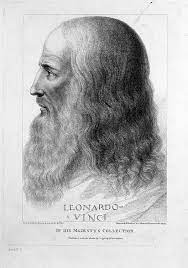
Leonardo da Vinci may well be the epitome of a polymath, but there has been many polymaths throughout history of course. Many more than today, as science wasn’t so evolved yet as having to pick your specific area of expertise in order to excel in any noticable manner. Or to add to prior knowledge.
So, Language Day today wants to find out how this is expressed in other languages. The word origin is the Greek πολυμαθής (polymathēs) which means “having learned much”. Mathematics is from the same root: μάθημα (máthēma) i.e. ‘knowledge, study, learning’. Hope this article has increased your knowledge, no matter what your chosen field or area of expertise is :)
Danish: polymat
English: polymath
Finnish: yleisneroEstonian_:_ polühistor, polümaat
French: esprit universel
German: Universalgelehrter
Greek: πολυμαθής
Hungarian: polihisztor
Italian: uomo universale, genio universale
Japanese: 博学者 haku-gakusha
Latin: homo universalis
Norwegian: polymat
Portuguese: polímata
Russian: полимат, универсальный человек
Spanish: polimata, erudito, erudita
Swedish: polymat
Updated 31.3.2021