
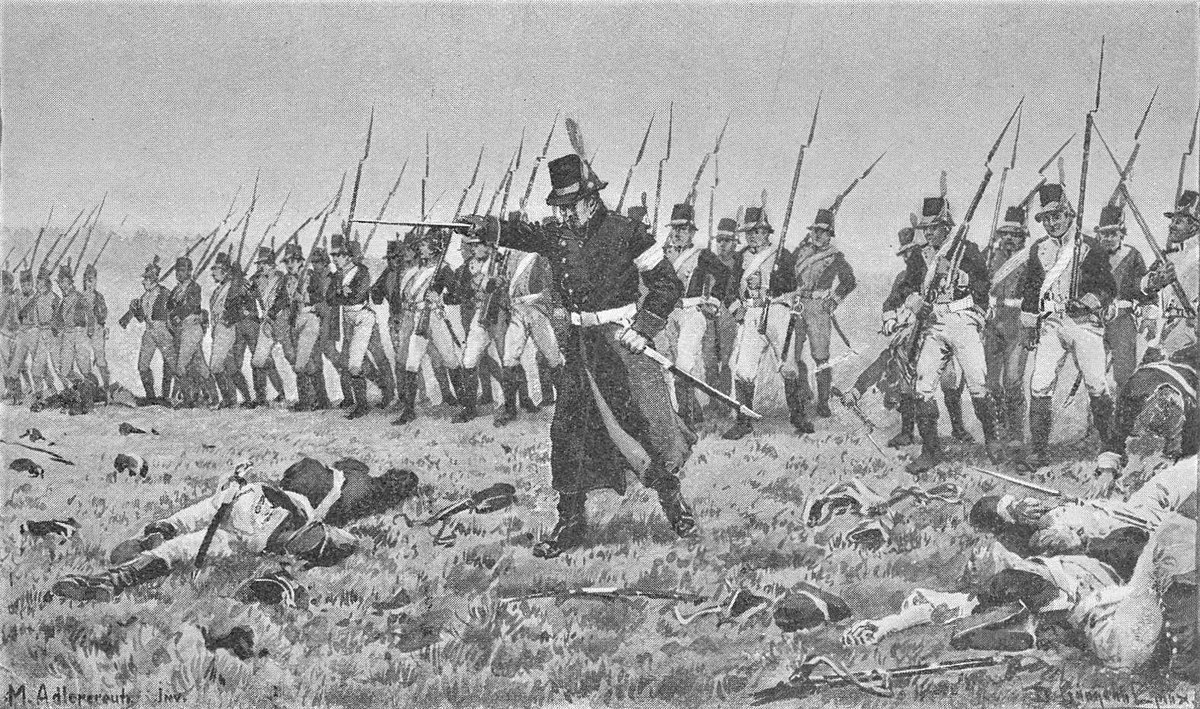
“The last attack of the Swedes” by Magnus Adlercreutz, illustrating the heroic Swedish attack in the Battle of Oravais, which ultimately led to their defeat.
one of the nicknames that the Finns have for their dear Western neighbors, the Swedes - namely Hurrit - may have a more dramatic background than usually considered?
The Battle of Oravais was one of the decisive battles in the Finnish War (1808-1809) between Sweden and the Russian Empire, fought on September 14th, 1808 by the Gulf of Bothnia in western Finland. It was in effect the last chance for Sweden to turn the war to her advantage, and a defeat would lead to its loss of Finland to Russia. As it did.
In the batttle, the Swedish soldiers were charging the Russians with their rifles and bayonets, and as they were charging, they shouted the battle cry Hurrah! Hurrah!
Since then the Finns, battling alongside with them, those fierce Swedes, called them Hurrit!
That is the explanation that some Finns, particularly those with Swedish heritage, have for the word. And even if this nickname is considered a bit on the derogatory side, it is part of the dear enemy syndrome. The Finns love to play against the Swedes in all sorts of sports events, and should they lose, they would usually root for Sweden!
2 There is, alas, another explanation for the word hurrit for it has been used since 1780s. It may be basically the same word as hurtta, meaning dog.
3 The third explanation is that it comes from the Swedish word for how or what, i.e. hur. For that was the word that was heard a lot when the Swedes and the Finns failed to understand each other, wheeling and dealing while clinking their beer steins in some dimly lit roadhouse in Finland a couple of hundred years ago.
Wherever the word Hurri (pl Hurrit) comes from, one thing is for certain. It is less derogatory than the Swedes' worst nickname for the Finns, Finndjävlar. It means the Finnish devils. But despite its historical meanness, it is also a wordage that can empower a Finn, and one that can actually be carried with pride.
Don’t we all just love our neighbors!