Reader’s Digest logo. Pegasus was added in 1939 by Lila Wallace.
This month marks 100 years since the first edition of the legendary Reader’s Digest, published in Greenwich Village, New York by the married couple DeWitt and Lila Acheson Wallace. The first 5000 issues were delivered by mail to subscribers on February 5th 1922, and, thanks to an increasing demand, you could by 1929 buy the magazine in the stands. In 1934 it doubled its pages from 64 to 128. Reader’s Digest - which was to become a household name for generations to come - was well on its way to a great future.
In 1936 the Wallaces found the Reader’s Digest Foundation, in order to promote education, journalism, youth organizations and international understanding. In 1939 Lila Wallace picks pegasus as the symbol for the magazine that by now has over 3 million issues in publication.
The first non-English magazine, Selecciones, is published in 1940. First printed in New York, but later in Havana, Cuba. The first Finnish issues, sold out right away, are published in 1945, the war still going on. After the war, as people yearn for all kinds of information, the international growth of the Reader’s Digest accelerates, and in 1948 the magazine starts using four-color images.
In 1952 Reader’s Digest has an extensive article on the harm of cigarette smoking, which causes many people to quit. In fact, the magazine had had an eye-opening article on smoking already back in 1924. In 1954 the young Alex Haley becomes part of the staff, and gets funding for searching for his roots. And becomes the bestselling author of Roots.
In 1955 the magazine still costs only 25 cents to buy - just like in 1922. The readers are asked whether they would accept ads in order to keep the magazine cheap. They would. The international issues have had ads from the beginning though.
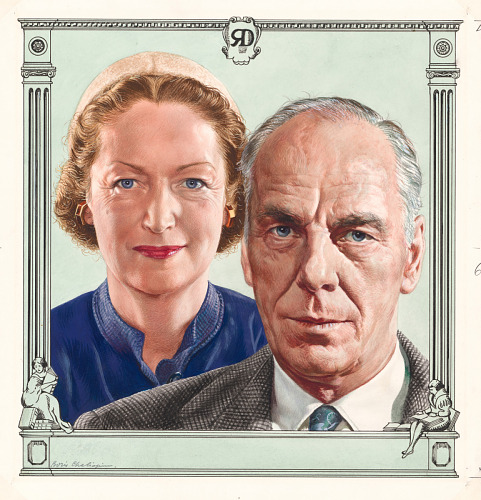
In 1967, 28 million issues of Reader’s Digest are printed globally every month. Five years later, the Wallaces retire. In 1981 DeWitt Wallace dies, and three years later his wife Lila. But the magazine goes on of course, and keeps on growing. In 1988, 50 years after the first British edition of the Reader’s Digest, 1,5 million flowers are planted in Kew Gardens to commemorate the event.
In 1991, after the dissolution of the Soviet Union, the Reader’s Digest begins its publication in 16 languages spoken in the former Soviet states, and in 2008 the continental China gets its own edition.
Throughout the decades Reader’s Digest has founded or inspired many organizations to promote writing, journalism, cooperation and philanthrophy. It remains a magazine that all of us can associate with something positive and lasting, filled with original, revealing and inspirational stories, humor, science and just about anything to do with everyday life.
Thank you for a great product, Mr and Mrs Wallace!